An Interview with Sarah Birch
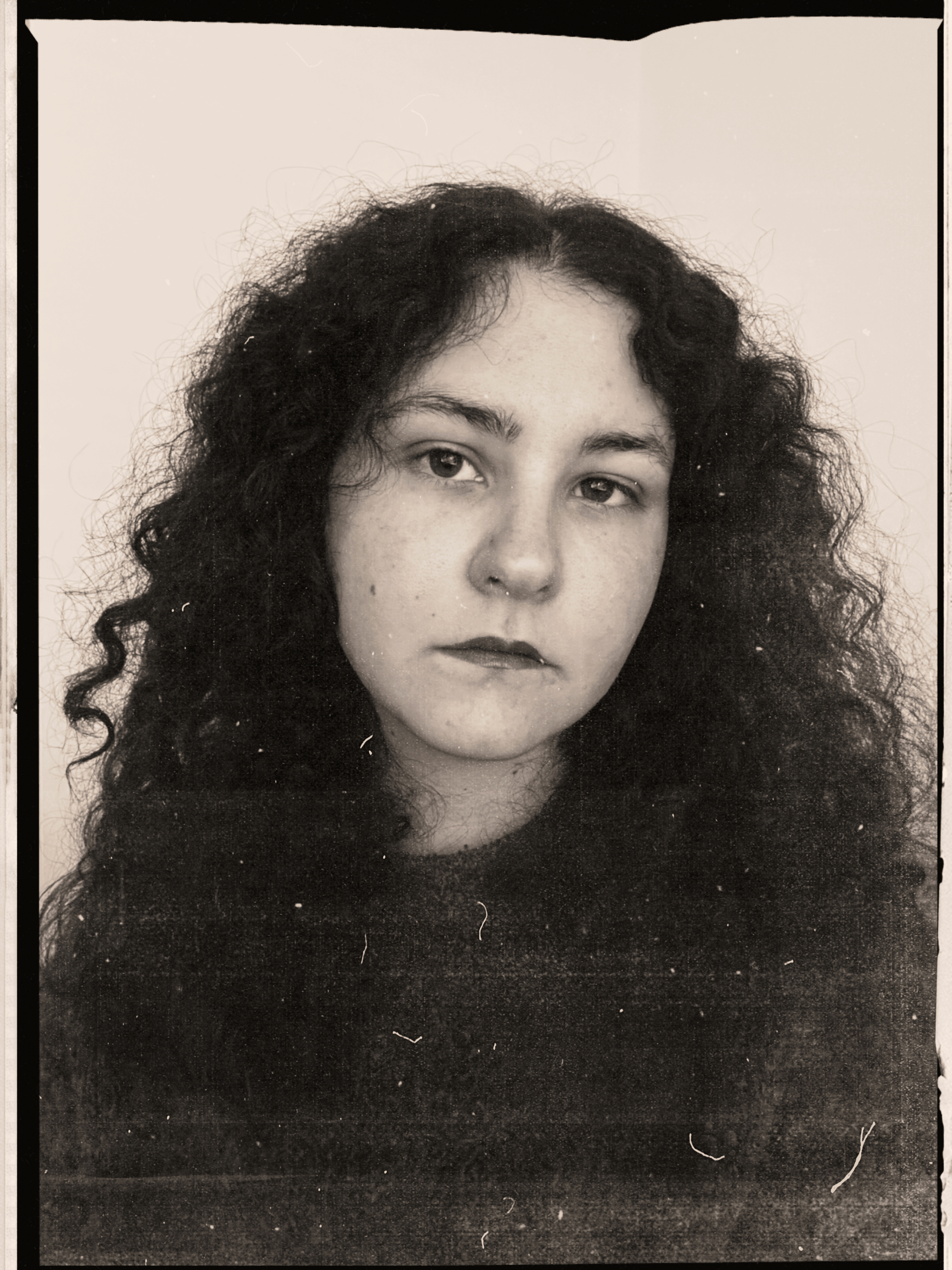
Sarah Birch (they/she) is a Boorloo writer who recently graduated with a Master of Arts from Curtin University. Sarah has been published in Cordite, Artery, Damsel and Pulch, to name a few. When not headbutting a keyboard, Sarah is either doomscrolling or loving so much it aches.
Ellie Fisher: As an emerging poet and writer, what have been some of your biggest inspirations, and preoccupations? Introduce us to yourself via your influences and fixations.
Sarah Birch: Do you know the term ‘doing it for the plot’? My whole life I have felt the need to do something extraordinary just so I could have an experience worth telling. And I did for a time—I swam naked in the ocean, traipsed down paths I had no permission to explore, I shed the skin I was ashamed of and made a home inside an uninhabitable body. As I’ve gotten older, I have found that I am inspired by all the things I ignored when I was searching for the extraordinary. I could bang on about Sylvia Plath (and I have!) But her poetry taught me that my experiences were worth sharing—that I do not have to leave stones unturned just because they have an ugly underside. I am inspired by local poet superstar Caitlin Kotula who makes each poem feel like a world I can crawl inside. Paris Rosemont who made me realise that I did not have to censor myself to be a writer (hell fucking yeah). Kaya Ortiz’s collection Past & Parallel Lives is where I curled up after a close friend of mine passed this year – I spent most of my time in between the lines of their countless Star Trek poems which inspired me to never let go of fan culture. Mabel Gibson always leaves me in awe—I remember standing beside her at the last Pelican launch I attended and thinking to myself ‘omgomgomg’ because she completely transformed how I confess in my own work. Dr. Karen Lowry was my supervisor for my master’s, and I credit her with pushing me to become the writer I am today. I could go on, though we’d be here for hours. The point I’m trying to make is that, as much as my work is mine, it has been shaped so beautifully by those I know and those I don’t. By what I engage with, and by what I left behind.
EF: What drew you to writing, and when? How does the act of textual production shape your life?
SB: In the earliest years of my life, I was hyperlexic—my parents assumed I had simply memorised the stories they would read to me but, when they would give me a book I hadn’t seen, I was still able to read it fluently. It wasn’t until 2025 that I was diagnosed with autism. Literature has always been nestled at my core. In pre-primary, they ran out of books to give me because I’d read them all, so they acquired books for children far older than myself. This passion evolved into writing. The first complete story I recall completing was when I was in Year 3 (I think). It was about a unicorn born with no horn. Even then, I was writing to communicate the things I couldn’t voice – how it felt to be bullied, to be an outcast, to be different. Every stage of my life has been defined by writing; fanfiction became my bread and butter as I got older (and NO, I will not be sharing my AO3 profile). Heading into university, I exchanged my fanciful stories for academic essays. I knew that writing was a pipedream I needed to let go and I did… For a heartbeat. I suppose we could call writing my ‘calling’ given how every time it rings, I answer. Writing has transformed my ability to communicate – I’m a stutterer, I am not as confident as I seem, and I like to think very deeply before I answer. Verbally you could call me a mess. Writing has afforded me the ability to communicate precisely, to avoid confusion (or to embrace misunderstanding!)
EF: In line with the theme of this issue, there is a long tradition of poetry being understood as an act of confession, particularly when a poem draws closely on the poet’s own life, or even simply from their experiences. What do you think we actually mean when we call a poem ‘confessional’? How do you engage with the lyric ‘I’ and how close is the narrator of your poems to yourself?
SB: This is like asking me to reveal my deepest, darkest secret! However, as the theme begs, I will confess. The narrator is always me. Everything I write is based on real experiences. Of course, I shroud it all in the surreal, in layers and layers of metaphor, in swapped details. Those with a keen ear or eye can catch glimpses of my truth. As an AFAB writer, and I’m sure this will resonate with many AFAB people, we are taught to edit ourselves, to limit ourselves, to not step over the metaphorical line in the sand. To confess is an act of resistance against these shackles; it is a kind of freedom. You don’t know where your words will land or who will hear them or how they will be interpreted but the goal is to release them into the world, to liberate yourself from the restraints we have been taught to maintain. To me, that is what confessional poetry is—the opportunity to voice what you were taught to silence.
EF: What excites you about modern poetry? Why is poetry still such an important form?
SB: Everything! Though, I never thought I would say that. I had always been a ‘poetry purist’—I loved Shakespeare, I loved the rigidity of form, and I thought modern poetry was a sort of ‘cheap’ imitation. A few years down the road, I took a poetry class with Dr. Madison Godfrey, and it Rocked. My. World. I think I was just in the right place at the right time but, for the first time, I let go of my presumptions and saw the beauty of modern poetry—the way it moved, the topics it could discuss, the sheer necessity of it. I remember turning my nose up at a poem that referenced ‘Skype’, and now, you bet your ass I’m using every colloquialism, I’m writing about the Teams meeting I’m meant to be in right now, I’m referencing the nominal width of a condom. I think poetry appears to be inflexible on the outside, especially because every word choice (in a way) must be intentional but now, I feel it is the freest form. As the world continues to police our thoughts and our lives, modern poetry becomes a vessel through which we can continue to rebel.
EF: How do your critical work and your creative work speak to each other, and what do you enjoy about how the two mesh together?
SB: My creative work would be nothing without all the critical research behind it—and, no, I have not been sponsored by Big University to make this claim. When I was embarking on my master’s dissertation, I thought I could throw words onto a page and make something out of them (as is my way). But honestly, my collection BOY TOY would be nothing without the hours (and hours and hours and hours…) of research I put in. This combination of creative and critical thinking was fully realised when I embraced ekphrasis. A singular poem of mine will have so much critical thought behind it—so many essays and articles read, so many references packed into each line—I can’t help it! For lack of a better metaphor, I really am a kaleidoscope of all I have experienced and absorbed. I always feel so small in the shadows of all those that have come before me—I never want to step on toes, or to repeat what someone has already said (but better). Ekphrasis takes the pressure off and shows me that my influences make me powerful, not unoriginal.
EF: Finally, where do you see your work heading in future? What are you working on at the moment?
SB: I wish I was working on something incredible, but the truth is, I’m just writing fanfiction. I do poetry readings here and there (get in touch with me if you want to work together! Please! I love performing!) The future is something I pale to think about but, my biggest goal in life, is to see my work officially published or captured in a singular collection. I would love for my words to have longevity. I am a very superstitious person so, when I originally responded, I edited this part out. But the whole point of this issue is to confess, so I will. In the future, I hope I am brave enough to pursue a PhD. Okay, I’m very raw now. Please look away.


Comments