An Interview with Lucinda Tassone
- Ellie Fisher
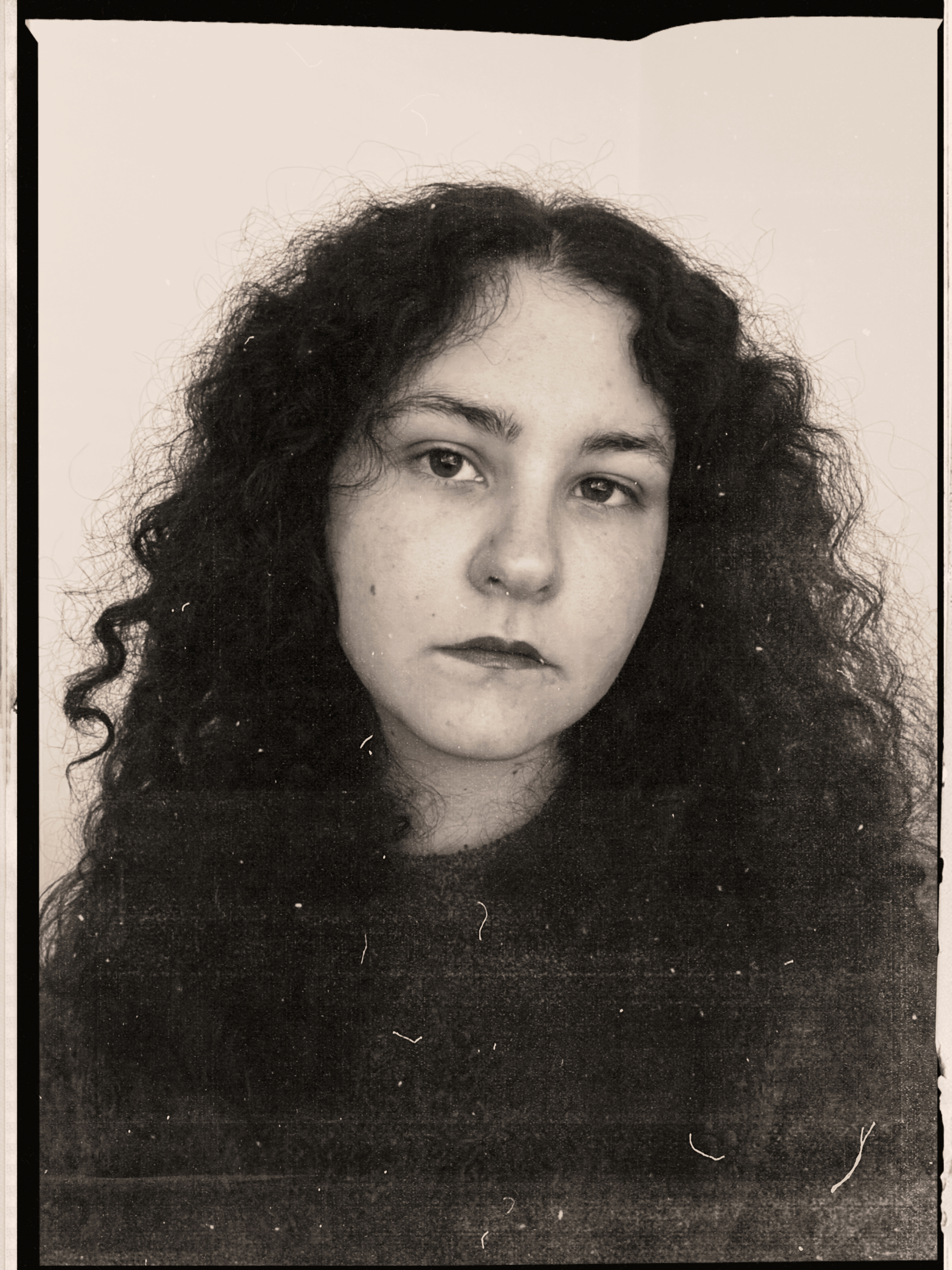
- 2 days ago
- 7 min read
Updated: 19 hours ago
Ellie Fisher: Tell us about yourself, in whatever way feels most interesting to you.
Lucinda Tassone: I don’t want to freak you out, but I think that I may be the voice of my generation. Or at least a voice of a generation. Or at least that’s what I would say if I was Hannah Horvath. Aside from being a major fan of pop culture and media, if I were to describe myself in terms of fonts, I would say I actively try to be a Times New Roman, but I’m actually more of a Papyrus in my day-to-day life.
EF: Your work moves between film, animation, and oil painting—how does each medium alter the way you think about the body, particularly in relation to gendered expression?
LT: When it comes to bodies- particularly my own, I know that I am not alone in my awkward relationship to it.
When working in mediums that exist across time, that being animation and film, I can narrate a transformation of the body. The body can be alive, it can respond; it can consume or be subsumed. It can surprise, it can shock, it can share our daily experiences. On the other hand, a painting is static, freezing a moment of contortion in time. I think paintings allow people to reflect on a specific moment. In the way a single frame may act as the crux of a film, the painting is the crux and nothing else. Regarding gender expression, my distortion of the body throughout all mediums leans more masculine to neutral. I find hyper feminine depictions or poses of the body to often be more sexualising and voyeuristic, something I am yet to resolve.
All in all, I am confident gender is a ruse. Although Nara Smith can try all she wants, I will not be embracing my divine femininity through tradwifery.
EF: The theme of this issue is gender—do you see your work as explicitly engaging with gender, or is it something that emerges more obliquely, through texture, gesture, or form?
LT: For me, depicting the human form is always in explicit dialogue with gender. I think this is because my identity is deeply embedded with the female experience. The way we have been raised to think, police and celebrate certain forms of select bodies is undeniable.
When I depict bodies as woman or man, male or female—or in some ambiguous place in-between—it is not an act of neutral representation. In the way Francis Bacon distorts the human form to heighten the visual experience, I implement his abstraction of form to similarly create visual intrigue.
I don’t know what this is just yet, but I know there’s a reason I paint the body, and why the bodies I paint are always processed through my experience as a woman.
EF: In what ways has studying both Fine Arts and Psychology shaped your understanding of identity?
LT: From studying Fine Arts and Psychology I have understood that identity is not easily characterised into majors. I find it difficult to even put into words, let alone singular disciplines. Before starting university, I thought about identity all wrong. I wanted to be a ‘psychology’ person because they were emotionally intelligent, observational, and attuned to the individuals’ needs and shortfalls of our current society. Alternatively, I also wanted to be the artsy, effortless and shiny fine arts person; an enigmatic manic pixie dream girl with a paintbrush in her hair. Alas, I have found neither discipline has provided me with the security I so desperately yearned for. To answer your question Ellie, studying has allowed me to refine my identity by understanding what it is not. Interestingly, I have found a greater sense of identity through critical conversations with like-minded individuals, reading of philosophy and literature, and living a life of love, open to receiving the insight of others.
EF: You publish under the name ‘hazel4lif3’, which feels both playful and coded. What does this name allow you to do, or to obscure, that ‘Lucinda Tassone’ might not?
LT:
I think the identity ‘hazel4lif3’ enables me to embody a name which resists perception. I mean, what does ‘hazel4lif3’ even mean? It’s nonsensical.
If you were to see a painting by Lucinda Tassone, you may think; Lucinda is a woman, she has a European last name, she lives in a Western society. While everything inferred is true, I feel it is a less true representation of myself than a random nametag paying homage to my cat. That’s why I think ‘hazel4lif3’ represents who I am more than my true name. A random, internalized, cat-loving person.
EF: As Pelican’s 2026 cover artist, your work will appear repeatedly across the year. How are you thinking about continuity versus disruption between each issue’s image?
LT: Again, I am obviously honoured to support the wonderful, independent student magazine that is Pelican. When I’m thinking about the series of works which will span across six issues, I strive to ensure I am creatively re-imaging and actively engaging with the theme, working within and subverting visual expectations. For example, if I played it in one issue, I would want to take a bigger risk in the next. I guess then it’s less a matter of continuity and more of disruption, surprising the viewer, keeping them on their toes. I definitely rely on my painting to glue all the works together.
EF: Your work has already been recognised through awards like the Minderoo Spirit Prize, and you’re the ekphrastic artist for the forthcoming issue of Artery Zine. Has institutional recognition changed the way you approach your practice, or the risks you’re willing to take?
LT:
If I have learned anything from painting, it is that when you make it for someone or something else, it is always unfulfilling in production and in audience consumption.
As for taking risks, I try to isolate myself from social media so I don’t feel bound to a certain idea of my image as an artist, however celebrated that may be. I even have an app on my phone that makes me do push ups to earn minutes of Instagram scrolling, I am truly dedicated to the cause.
If I want to foster a practice aligned with my values and ethics, it is important that I explore my ideas without judgement from the self, or from the forecasted reception of others. Additionally, it is an important part of my identity to resist the material and social allure of institutions. The West has excluded, withheld, and rewritten the narrative of important groups from our centred ‘art canon’, so I always take any acclaim with a grain of salt.
My goal is to make art that spiritually fulfills my insidious urge to be creative, and I just cross my fingers and hope it resonates with a few.
EF: Your exhibitions span both university and independent gallery spaces. How do different contexts of display affect the way your work is read or experienced?
LT: I am hyperaware of the fact that I had access to an art education from an early age. I also have always had the social and economic support of my parents to peruse a creative career. From the beginning, I have known that art exists, it was accessible, and it is something that if I worked hard enough, I may be successful in. My story is incredibly privileged, and I often wonder how many potential Picasso’s or Sherman’s or Freud’s the world misses out on because of social, class, gender and cultural barries. Therefore, I am simply interested in making ‘high’ art. I am also not interested in adding to the often-inaccessible production, writing and situating of art. Of course, I am grateful for my work to be exhibited in any space, but in a world where so many people have limited resources to experience and interact with art, I strive to create art digestible in any context, legible to any person- regardless of their familiarity with the form.
EF: Can you talk about a particular artist, filmmaker, or text that has been formative for you, and how that influence manifests (or is deliberately resisted) in your work? What inspires you? What made you want to become an artist?
LT: The artist Deana Lawson has definitely influenced my work in terms of absurdity, composition and subject matter. Her photography is incredible, exploring Black bodies through beautiful fictive narratives in domestic stills. Like Cindy Sherman who I also love, I find Lawsons work to have an asperity which I try to emulate in my own practice. Her work is bold, unapologetic and sharp. Lawson is not afraid to confront the gruesome, to get her hands dirty, to go there. I want to embody this fearlessness, which is why I also try to embrace the graphic, the repressed, and the at times, the disgusting. Lawson also mentions that her photographs are intimate because many of her subjects feel comfortable posing for her because she is a woman. In the same vein, I hope the individuals I wish to portray trust my sincere narration in similar manner, especially between women and gender non-conforming individuals.
EF: Looking ahead, what feels urgent or unresolved in your practice right now—what are you trying to get closer to, or perhaps avoid fully articulating? Where do you hope to take your practice in future?
LT:
In the past I have portrayed common experiences through personal subjects, for example in ‘I Love Fast Food’ (2024), I used my sister to depict a McDonalds worker. I have since shifted to internet images to communicate similar human experiences. For example, sibling despair is depicted ‘Romulus and Remus’ (2025). Whilst I enjoy using internet images, I have also been thinking about how this algorithmic method of image sourcing brings new connotations to the work—and what I want to say about it. Finally, I have the lifelong journey in mediating my want to be a successful practicing artist with the shifting social role of an artist in contemporary society. Often I contemplate what path I want to follow; in particular I aim to navigate my anxieties of pursuing a serious creative career bearing in mind the financial realities for most living artists.


Comments