What Rama Duwaji is Doing Right.
Updated: Jul 28
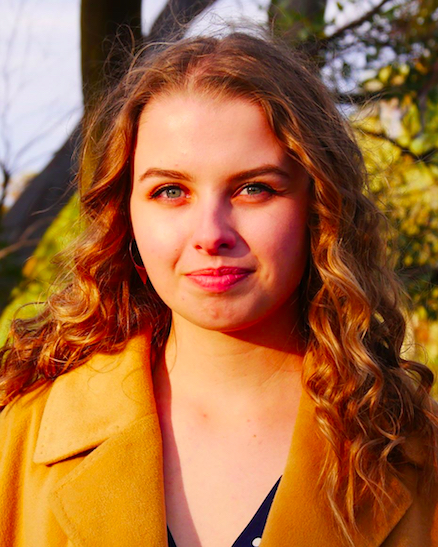
By now you must have been living under a rock if you haven’t heard about New York’s latest First Lady, Rama Duwaji. The artist and activist was plunged into the spotlight some months ago in the wake of her husband Zohran Mamdani’s successful mayoral campaign, and as such has faced support and backlash from both sides of politics. This socialist, Muslim, twenty-eight-year-old professional artist is bringing a new energy and startling authenticity to US politics that has seemingly been missing, not just in recent years, but perhaps for as long as anyone can remember.
Born in Texas to Syrian parents from Damascus, Duwaji’s family relocated to Doha when she was a child, and the majority of her schooling took place in a number Persian Gulf states. She attended university in Doha, and then Virginia, with artist residences in Paris and Beirut before returning to New York to complete her Masters of Fine Arts in 2024. An established illustrator, animator, and ceramicist, her practice generally revolves around celebrating Arab culture and championing social justice causes. She has worked for the BBC and ARTE, and shown her work in solo exhibitions.
Duwaji’s illustrations are almost always overtly political. She works as a political instigator in much the same way as Mamdani, but rather than political office, she is looking to make change through art. Duwaji expresses a number of political themes through her work, championing stories about resisting tyranny and exploring experiences of people suffering under regimes and living in war. However, in a beautiful kind of symmetry, she also explores the comfort found in cultural expression, traditional food, practices, and art forms, working to dismantle Eurocentric beauty standards and approaches to mental health, while championing feminism. Her artistic practice is deeply couched in notions of resistance, community, and care, and Duwaji has spoken on using everyday warm human moments to inspire her to draw. Taking solace in these moments and pacing herself to keep the momentum of her activism rolling. Crucially, she puts forward empathy above all, as key to forming and maintaining an artistic practice, a practice she uses as a tool to process the world around her and, in her words, “establish an archive of memory.”
Duwaji has shown herself adept at using fashion both as a political tool, and as a way to further spotlight her political beliefs while retaining her own identity. At two swearing-in ceremonies for Mamdani at the beginning of the year, Duwaji stepped out in a vintage Balenciaga coat and archival earrings, both rented, and boots on loan from Miista. The next day she sported a coat from small independent Palestinian-Lebanese designer Cynthia Merhej of Renaissance, Renaissance, made in the middle east in collaboration with Duwaji. Championing borrowing and sustainable fashion in this way reflects the socialist values of Duwaji and her husband. Spotlighting Middle Eastern brands—particularly a small third generation couturier, run by an all-women team—disrupts the xenophobic and sexist rhetoric thrown around by many US politicians at the moment. These strands of community, care, and feminism all weave themselves into the themes of Duwaji’s art practice.
If anything, Duwaji has shown that it pays off to understand art, even just a little bit. In stark contrast to Mamdani’s slick PR campaign—designed, in part, by Duwaji—and Duwaji’s own interactions with the media, we have the disastrous Vanity Fair White House photo shoot. If art is a weapon, it annihilated those clowns and left no survivors. Whether it’s a close up on Karoline Leavitt’s Botox injection sites, the single crumb on the lips of JD Vance, or that awkward group photo from hell, Vanity Fair utilised the nuanced art of photography to stage a systematic take down.
In stark contrast, Rama Duwaji’s first major photoshoot with The Cut capitalised on every ounce of her cool. The photos were carefully curated, with a strong understanding of how to present an individual in control of their surroundings, walking a fine line between quirky and fun whilst being timelessly elegant. While she’s photographed essentially inside a box, it’s what she does to command that space and make it work for her that underlines the core message of this shoot: Duwaji might be the wife of the new mayor, but that won’t detract from her own identity and purpose. Duwaji harnessed the power of art to present herself on her terms, rather than have it be used against her.
What sets really Duwaji apart in the realm of ‘first ladies’ is the active retention of her own individual identity. Her art practice and professional projects seem to be afforded the same, if not more prominence in her life than her support for her husband’s mayoral campaign and now office. Duwaji conspicuously resists centring men in her life, at one point blowing off the NYC mayoral debate to teach a ceramics class. Apart from a single post halfway through last year, Zohran doesn’t feature at all on her Instagram. Instead, Duwaji mostly posts about things that inspire her art, New York City, and comics denouncing ICE and Israel’s genocide in Gaza. While she’s showing up to the stuff that matters, it seems that Duwaji is so far managing to show support without compromising the trajectory of her own life.
Duwaji understands art, and uses it effectively to support her own agenda, and to present herself as the first lady that she wants to be. She is curating an image for herself as a new type of first lady, her art, her politics, and her identity working together to create a public figure that, much like her husband, speaks to people who have historically gone underrepresented and who have been mistreated by structures of power. The Gen-Z first lady of New York has only just begun her journey in politics, but I for one excited to see what she does next.
Image credit: @ramaduwaji via Instagram


Comments