‘In a sense, an un-settling of landscape is always at stake in art made in Australia, whether you intend it or not’: An Interview with Paul Boyé
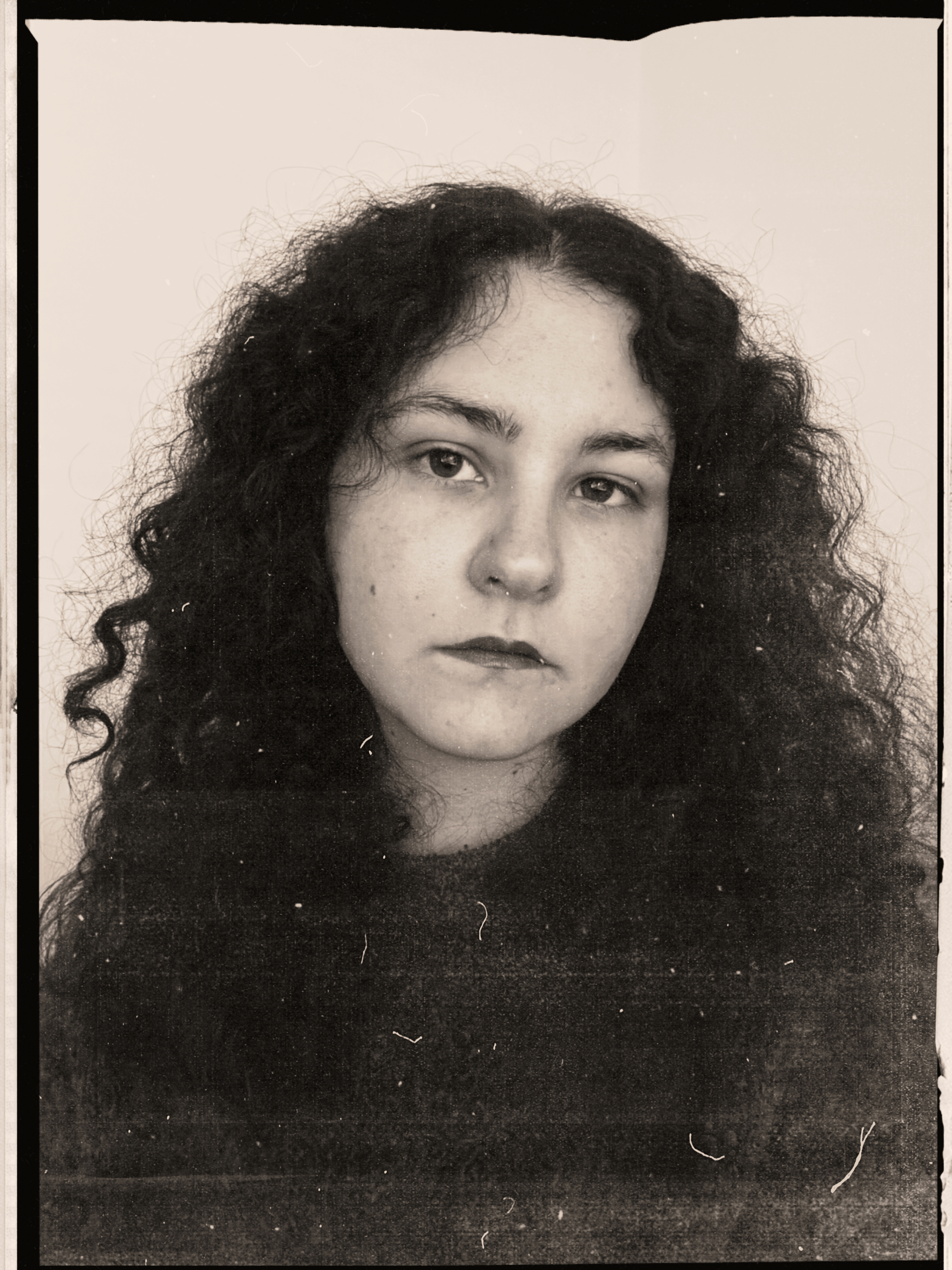
Paul Boyé (they/them) is a writer and curator based in Boorloo/Perth. They are the Curator at Goolugatup Gallery, Lecturer of Art History and Curatorial Studies at The University of Western Australia, and has worked with artist-run projects such as Cool Change and un Projects over the last decade. Paul is a part of the performance collective ‘mgmgmg’ and collaborates often with Boorloo-based artist Ella Valentine. Following their PhD thesis on ‘the inhuman’, their creative research seeks pathways through encroaching inhuman worlds and technologies: this can be seen in recent exhibition projects investigating the psychosocial limits of domestic and work environments (SNEAK OUT, TBC, Melbourne) pr travelling through poetic thresholds of interiority and exteriority (The world is all cut-outs then & ACCURSED SHARING, Goolugatup Gallery, Perth). In collaboration with Isabella Hone-Saunders, Paul is a Curator-in-Residence at Monash University.
Ellie Fisher: For readers who may not yet have had the pleasure of encountering your work, could you introduce yourself and your practice? What questions and ways of seeing have consistently informed your projects?
Paul Boyé: Hi Ellie, thanks for your questions. I tend to get a little tongue-tied when introducing myself and my work, not really knowing where to start. I’m a ceaselessly curious person, often not fixating on any particular question or idea but rather seeking to draw connections between other people’s questions, actions and ideas. However, for the sake of a clear introduction, I am a curator of contemporary art exhibitions both as my day-job at Goolugatup Heathcote and with independent projects as they come up. I write essays mostly in response or as an accompaniment to exhibitions, but occasionally with theoretical and critical aims. I teach art history and curatorial studies classes at the UWA School of Design, where I have worked for the last six years. Across most my work, from my PhD studies until today, I’ve been interested in the scrutiny of images and systems through histories of technology and art.
EF: Landscape has never been a neutral subject. It carries histories of ownership, extraction, belonging, resistance. How do you approach working within that complexity, particularly in so-called Australia, where every landscape is also Indigenous Country?
PB: I feel fortunate to live in a time where access to information and cultural resources from the sovereign custodians of these landscapes is readily available. So much of what I’ve learned about the Indigenous custodianship of Country, inextricable from lore and language, comes from art and artists, that generously share this knowledge through their work. This is a recent turn, against decades of total institutional marginalisation, to say the least, and shouldn’t be taken for granted. I think a key word is ‘reciprocity’—learn about Country not just in celebration or acknowledgement, but to take an active role in its care. In my work, I think another key word is one you mentioned above—‘solidarity’, and this amounts to being in the fight for Indigenous rights across landscapes. For instance, the beautiful, compelling paintings of Wendy Hubert also represent in each brushstroke the ongoing fight of Yindjibarndi against the Forrest family and Fortescue, who have destroyed hundreds of cultural sites in their heedless extraction of Pilbara Country.
EF: Your practice often encourages sustained looking, as opposed to immediate interpretation. What does close attention reveal about a landscape that might otherwise remain unseen, and how do you cultivate that attentiveness in your own work?
PB: In my opinion, there are a few bad faith assumptions made about the gallery viewer as regards their attention and looking. The act of looking has transformed, and attention today is often feral and partial. It is a losing game to feel resentment for the viewer who looks at their phone and spends only a few seconds with an artwork at a time. So, my approach to attentiveness is to keep an open mind and focus on building mood and atmosphere in the gallery that unlocks further forking paths of interpretation. In an exhibition last year, I showed a video work by Michael Snow, Solar Breath (2002): a sustained fifty-or-so minutes single shot on curtains billowing against an open window. Every once in a while, the garden outside is revealed. Muted conversation and the clinking of silverware can be heard in the background. While quietly compelling and watchable in full, I feel there would be something for the viewer who samples the film or hears some of the louder moments from another room. All this to say, there isn’t a right or wrong way to look, but rather we should be open to challenges in looking, whether that be in sustained contemplation, or in a partial impression of the mood in a room.
EF: Many artists speak of landscape as something to be ‘represented’, while others understand it as something they are already entangled ‘within.’ Where do you situate your own practice between observation and participation?
PB: Since the conception of second-order cybernetics we have known that all systems imbricate the observer. I think the capacity to find an ‘outside’ as an observation post often yields generative abstractions about whatever I’m thinking about, but such abstractions are only useful as they are hedged by my own morasses, both material and intellectual. Generally speaking, I believe curating is a participatory operation. It requires empathy and attachment to a certain degree, which can be a vulnerable process. But that vulnerability is often a way to meet artists on their terms, who are expected to disclose and exhibit themselves through their work and ideas.
EF: As both a curator and a lecturer, how has teaching changed the way you think about landscape? Have conversations with students altered or challenged your own understanding of place and artistic practice?
PB: Teaching is a continuous challenge to my own understandings and biases, which makes it one of the most valuable parts of my life and work. Each new cohort brings new complexity to understanding the place we are in and the lands we live on. I find it’s incredibly useful to get out of the classroom and teach work in the galleries and museums. Not only for the sake of being in the gallery, but that the gallery is located in the world i.e. off campus (haha). Last semester, a group of students taking my ‘Art Writing’ seminar undertook a residency at Underscore gallery and studios, in Northbridge. Instead of just looking at art, we considered the street and the society around exhibition spaces. To me Northbridge is a dynamic landscape, laden with cultural history that needs to be experienced to be understood.
EF: Environmental change increasingly reshapes the places we inhabit, from urban development to ecological loss and climate instability. How has this shifting reality influenced the kinds of landscapes you choose to engage with, or the questions your work asks of them?
PB: I came up in the midst of peak ‘Anthropocene’ scholarship, and one of the lasting ideas from this time for me was the notion of ‘polycrisis’, from Adam Tooze – that current and impending climate catastrophe is difficult to feel or think about through the haze of interconnected shocks: genocide, apartheid, trafficking and other cruelties. I must admit, I more often than not find myself numb to the suffering of landscapes. On the other hand, I also believe that ecologies—systems of homeostasis and exchange—are exactly the path to take in reclaiming an ability to feel such crisis. It makes the abstract cruelty of the situation somewhat more concrete. With art, I’m acutely aware of the craven greenwashing our culture industries generate to ‘forgive’ mining industries in exchange for much needed patronage. It’s hard not to be cynical, but as a curator I find that trusting in an artist’s capacity to amplify ecological affect can yield a positive gain in actually feeling something in our disorienting, collapsing landscapes.
EF: There is a long tradition of ‘Australian’ landscape art that has shaped national myths and cultural identity. Which aspects of that tradition do you find yourself in conversation with, and which assumptions do you feel contemporary artists should resist or unsettle? How do you negotiate the ethics of representing places that are culturally, politically, or environmentally significant without reducing them to aesthetic objects?
PB: This is a big question, explored perennially by Australian art historians. Personally, I’ve never felt too attached to such pictures of national myths. An Arthur Streeton sunset or a Frederick McCubbin bush scene doesn’t do much for me. I’m far more compelled by the counter-colonial landscapes imaged by Western Desert painting (Paddy Tjapaltjarri Sims’ brilliant painting from the State collection is a great introduction, currently on display at AGWA I believe) or mythopoetic work by collectives such as the Tennant Creek Brio. In a sense, an un-settling of landscape is always at stake in art made in Australia, whether you intend it or not. I feel art can be a productive activity for undermining assumptions and distortions, and more often than not contributes to the significance of places, rather than reducing them.
EF: Universities can sometimes feel disconnected from the landscapes they physically occupy. How do you think art education might better encourage students to engage critically with the places they study, live, and create within?
PB: Beyond just leaving the campus in the first place, art school is a great place to build alternative modes of living and socialising. The studio has always been a fine place to talk shit, slow down and conspire. I’m always thrilled to see students gossiping and undermining the institution toward making better places for themselves. I have to stop myself from getting too involved and making the scene daggy! The UWA School of Design is on a completely different campus across the road that many students on ‘main campus’ don’t even know exists. As an undergraduate student I loved this sense of independence from UWA, which in part gave us license to make weird films and strange performance art. That being said, (putting my daggy lecturer hat on) come visit! We have bi-annual collective exhibitions of work from across the school, and the brilliant ALVA Student Society hosts markets, drawing classes and other social functions for students. To answer your question, the university is disconnected insofar as it takes the critical intervention of students to make it a place to be at all.
EF: For a generation of emerging artists and writers thinking seriously about landscape, what kinds of questions do you hope they continue asking? What conversations around place, ecology, and artistic practice do you feel are only just beginning?
PB: In a world of encroaching inhuman politics and machines, I still hold a lot of hope that newer generations will cut through the bullshit and, while it can be hard work, act in making and thinking for yourself, with others. I sometimes daydream about previously unimagined coalitions forming, unions of artists that stand up and express themselves without constantly being measured to the KPIs of the neoliberal institution. It might take a pretty traumatic bubble-burst moment to open back out our capacities, but it’s what our shared landscapes need, lest they continue toward homogeneous, desolate and dull ends.
EF: Finally, what is forthcoming with your own creative practice? Are there any projects or developments you’d like to share?
PB: Speaking of hope, I am in the midst of a curatorial residency at Monash University with collaborator and dear friend Isabella Hone-Saunders, who is currently undertaking a PhD about hope as a curatorial methodology. We will be producing our second exhibition titled ‘Stay away from nothing’, which will be on show in October at MADA Gallery. I’m also working slowly through the archive of a mentor of mine, the late Peter Mudie, who taught units in experimental cinema at UWA which frankly changed my life.


Comments