An Interview with Patrick Marlborough
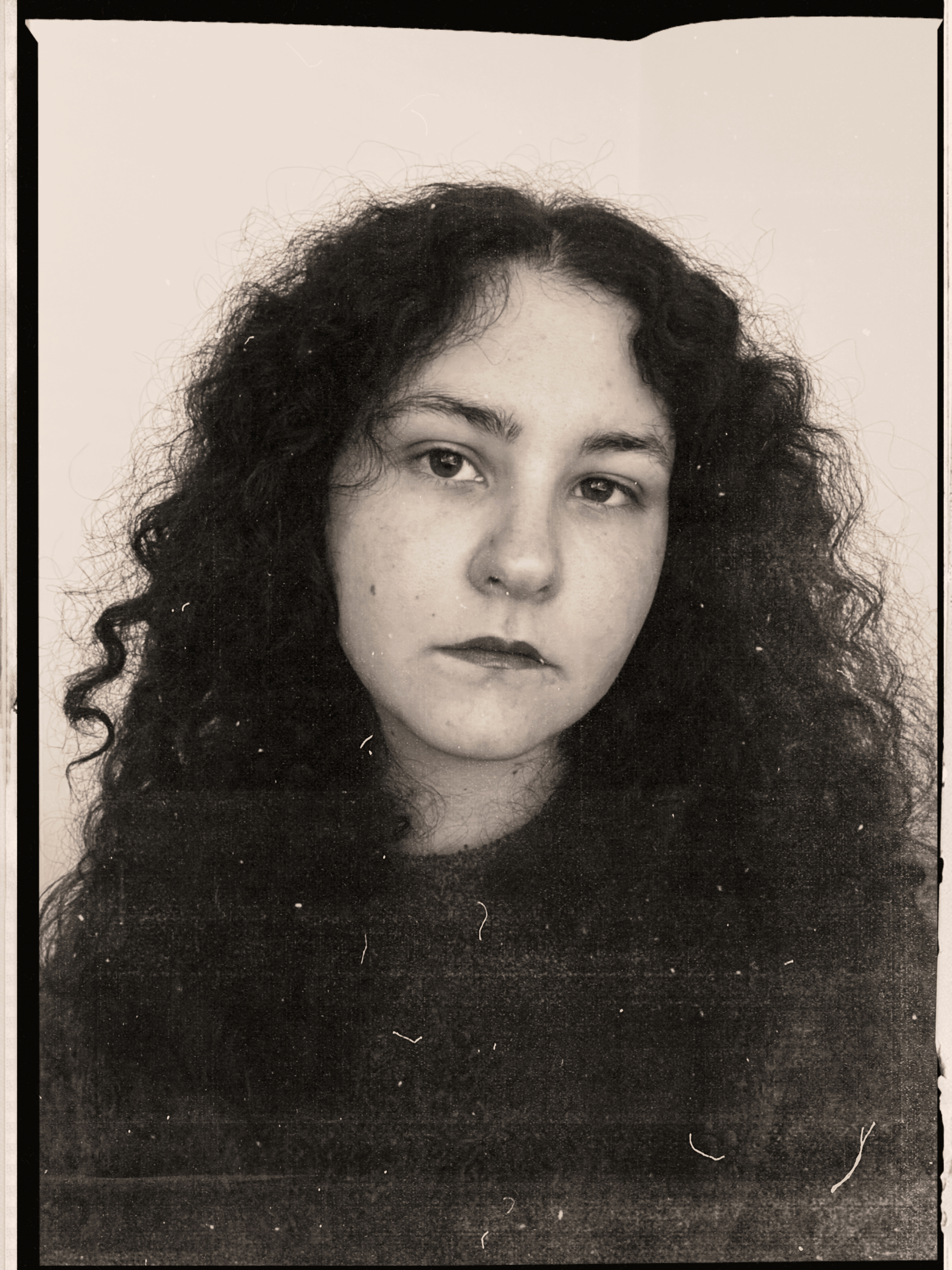
Patrick Marlborough (they/them) is a Walyalup-based writer/comedian whose work has appeared in Vice, Slate, Gawker, The Guardian, Rolling Stone, Overland, Meanjin, Crikee, Junkee, Cordite, Kill Your Darlings, Going Down Swinging, The Saturday Paper, Kotaku, Noisey, and yes, Pelican Magazine, of which they were the editor in 2011. Their debut novel Nock Loose was released via Fremantle Press and has been compared to Joyce, Vonnegut, and Pynchon.
Ellie Fisher: For readers who might not know your work, could you introduce yourself and tell us a little about what you write? Who is Patrick Marlborough?
Patrick Marlborough: Patrick Marlborough is an underemployed gaddabout who has been working as a writer since they were fifteen or so, and has been published just about everywhere outside the Murdoch Press. I am a comedian and musician also, but I feel like I’m mainly known as the guy that writes inflammatory essays that burn any potential career bridges, and for live shows that make people feel like they are going to go ‘full NITRAM.’
EF: Your writing often moves between genres and modes, such as journalism, criticism, satire, and fiction. What draws you to those forms, and how do they speak to one another in your practice? Is genre itself a scam?
PM: Not to be too trite about the whole thing, but at the end of the day, it’s all words, and the images and stories words conjure up, and I try not to differentiate the nature of the magic/conjuration when I set about working in any form/medium/time-sink. My multidisciplinary approach is informed by 1) a lack of any one thing being enough to sustain yourself in Australia (let alone Perth) but also 2) a genuine interest in each mode of working/reading. The biggest weakness I see in Australian writers is that they tend to stay in one lane as both writers and readers, and you can really tell when someone is a Montessori kid who has not watched an episode of The Simpsons, and likewise when someone is a YA Romantasy consumer who would suffer frontal lobe collapse if they picked up Melville. I want to be the best at all of it, so to do that, you have to engage, sincerely, with all of it. It’s one big Jenga tower, all the blocks are interconnected, and it's your job as an artist to maintain them while ever-shifting them around.
EF: Tell us about your novel, Nock Loose (Fremantle Press, 2025)!
PM: Nock Loose is a post-modern literary novel in the style of Thomas Pynchon, Helen DeWitt, Rovert Coover, Paul Beatty, and others. It’s at once a sorta comedic assault on the prevailing commercial trends in OzLit (airport crime fiction, small town with a big secret slop, trauma dump queer travails etc) while also a screwball literary cartoon that’s a spoof-of/homage to Australiana, fantasy novels, and this country’s tilt at national mythmaking. Most importantly, it’s fun and capital ‘F’ Funny, both of which are loosely verboten notions in OzLit.
EF: You’re often involved in conversations about the current—and future—state of Aus Lit, as well as discussions around its past; with ever-constricting funding for the Arts, as well as the threat of generative AI, what is your personal advice for students looking to carve a niche in a creative field?
PM: The industry is as bleak as it gets and only getting bleaker, and the decisions (both creative, and business) are being made by incredibly limited mid-wits who kinda get off on nudging up against talent while also suppressing it. There is a loosely affiliated gaggle of artists and publishers that are trying to butt against this, and hopefully a big change will be in full swing by the time some of you younger voices properly come up, but I’ll say this as a piece of advice—be a genuine freak. Read as widely and diversely (in the true sense, not the Memphis corporate art sense) as you can, and hone hone hone your voice until it is unlike anything else in the Australian scene (not too hard, as there’s really only four or so voice archetypes that the business finds acceptable). Get weird with it. Do the work. So many people don’t do the work. It is a slog. You’ve got to tough it out if you truly want to ‘get good.’
EF: You were once involved with Pelican. What are your memories of writing for and working on the magazine, and what role did it play in your development as a writer? Student magazines have long been places where writers find their voice, make mistakes, experiment… Looking back, what did Pelican allow you to do that other publications perhaps couldn’t?
PM: I started writing for Pelican when I was eighteen (circa 2009, I believe) and was editor by the time I was twenty, which was quite young (too young) for the role at that time. I was an absolutely manic smartarse constantly winding the uni up (please see the cover of my final edition as editor to understand why they threatened to expel me) and writing things so embarrassingly unhinged that if I was confronted with them now, I’d most likely drop dead from an aneurism on the spot. But I think it’s important for young writers to have a space to be both bad and kinda crazy. You need to make those mistakes publicly if you really want to pass through the fire towards something better. I led the ‘Save the Pelican’ campaign from my bedroom in 2012 (some young fascists attempted a hostile takeover) and the effort of that literally hospitalised me, so I haven’t really followed the publication since then. But it’s a vital stepping stone in a dying ecosystem, and I hope it remains a place for young writers to both embarrass themselves and get over that embarrassment.
EF: Boorloo/Perth often appears in conversations about your writing. How does memory shape your relationship to the city, and has that relationship changed over time? What does place/space mean to you?
PM: Perth is my Springfield. I’m a born and raised Freo lifer, and it is a big part of all my work/fiction (my Fogarty shortlisted novel A Horse Held at Gunpoint was a comic ode to Freo). I think because the arts scene here is so Melbourne and Sydney-centric (especially publishing) Perth can kinda be a sandbox for writers to play in unattended and unabated by the weighty self-importance of, say, those two wanker capitals. I think the mining boom has made Perth into an ultra-demented hyper-capitalist hole-scape—a sorta living metaphor for coalface Anthropocene wacky end-times. This makes it perfect for my specific kind of writing, and I’ll always loop back to it as a sorta missing level of Dante’s Inferno—the wildest intersection of ultra wealth and negative imagination.
EF: You’re currently sitting on a wealth of projects and ideas, including several unpublished manuscripts; what are you most looking forward for fans of your work to next see from you?
PM: I’m on four finished manuscripts, two of which were shortlisted for major awards. All my books are interconnected—they exist in ‘The Munterverse’ (Munter is the fictional energy drink in all my fiction), an alt-reality WA haunted by wisecracking ghosts, dog revolutionaries, the bandits of The Don Coyote bikie gangs, and its own off-brand Sega World clone. It is hard to sell Australian publishers on alt-comic literary fiction, even after the critical and commercial success of Nock Loose they have next to no faith in the mere idea of it. But I’m happy to bankrupt myself getting these books out if they won’t do it. These books are damn good and a damn good time. Again, to young writers: don’t sit about waiting for these people’s permissions. If you feel you know better than them, chances are, you’re right!
You can follow Patrick Marlborough on Instagram at @cormac_mccafe, or subscribe to their Substack, The Yeah Nah Review.



Comments