Interview with Prema Arasu
Updated: Jul 28
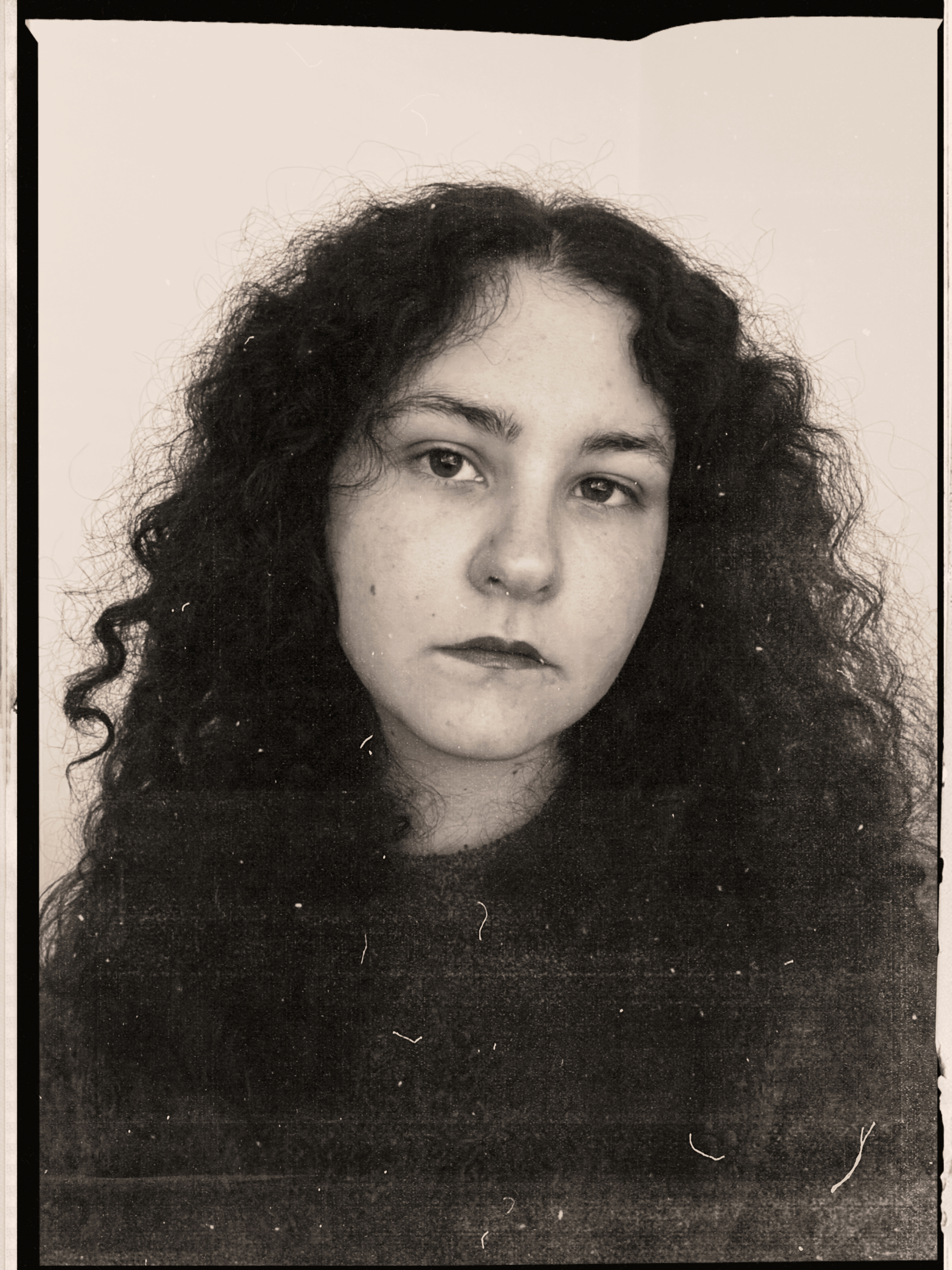
Prema Arasu (they/she) is a writer and academic at the Deep-Sea Research Centre at the University of Western Australia. Their research utilises transdisciplinary and creative methods to investigate the aesthetics of the deep sea. In 2023, Prema’s fantasy novel, The Anatomy of Witchcraft, was shortlisted for the Fogarty Literary Award.
Ellie Fisher: Tell us a little about yourself, for readers who aren’t yet familiar with you.
Prema Arasu: I am the only person in my family with freckles. I dropped out of an MBBS to study English. My first ever published story, ‘Spaghetti’, was in a 2014 issue of Pelican. I collect different editions of Howl’s Moving Castle by Diana Wynne Jones. I teach creative writing at the School of Indigenous Studies at UWA and supervise honours and PhD projects in the School of English and Literary Studies. My office is on the first floor of the arts building and I have my own mini fridge. I am not the milk thief.
EF: You wrote many of these poems while embedded as a humanities researcher at a deep-sea research centre. How did working alongside scientists shape the way you approached poetry, both formally and conceptually?
PA: Many of my poems emerge out of intimate moments with the group, in settings that wouldn’t necessarily be accessed by an artist doing a short-term residency with the team. Because I was a full-time employee there, I was there for work meetings, lunch breaks, lab work, after-work drinks, and even a tiny bit of fieldwork. This enabled me to write poems such as “staff party”, “new species” and “birthday fish”. It also gave me the time and space to fully engage with the science: experimental design, data collection, data processing, writing papers; leading to more technical poems such as “Allicella gigantea”, which turns a gene into a poem.
EF: Some of these poems explicitly reference academic theory, critical ocean studies, or object-oriented ontologies, while others are extremely spare or playful. How do you think about audience when writing work that moves between scholarly discourse and poetic experimentation?
PA: I do not think about the audience at all. When I wrote these poems, most of them were just thoughts I wrote down and occasionally sent to the Deep-Sea Research Centre group chat. The more theory-dense poems were written for myself and maybe a small handful of oceanic humanities scholars around the world. There is one exception: “A Sonnet to a Fair Kraken” was written for China Miéville, although he doesn’t have Instagram, so I’m not sure how to get it to him.
EF: Vampire Squid repeatedly questions how humans construct the deep sea (as unknowable, strange, monstrous, or even sublime). What role do you think poetry can play in reshaping public imagination about environments that most people will never experience directly?
PA: Poetic language has an immense capacity to question and reconstruct the ways in which we relate to the natural world; this is well-established in the literature and in the academic reception of the Romantics and of contemporary ecopoets. Poetry is a mode of intense subjectivity and contrasting this with the passively voiced pretence of scientific objectivity makes for surprising moments of bathos—disrupted expectation, often to comedic effect. In terms of its actual practical role, however, poetry has such as small reach that it is unlikely to have an impact in comparison to, say, The Conversation articles I’ve authored.
EF: Several poems reflect on identity, belonging, and being ‘in-between’—especially through figures like the vampire squid itself. Did you consciously see the creature as a metaphorical companion for the writer, or did that resonance emerge through the writing process?
PA: No, there are absolutely no metaphors in this book of poetry. I personally don’t believe in metaphors or figurative language of any sort.
EF: You draw heavily on collaboration and proximity to scientific research in your writing here. Do you see yourself continuing to work within interdisciplinary environments, or are you curious to move into different spaces for future projects?
PA: I’ve been seeking support for a project which extends my aesthetic, kinship-focused approach to the deep sea to two other environments which are conceptually and physically inaccessible: polar oceans and the alien oceans of distant moons. The creative outputs of these endeavours will likely take the form of science fiction stories.
EF: Looking ahead, what questions—creative, ecological, and so on—feel most urgent for you as a writer right now?
PA: It is difficult to create when the systems around are falling apart. I’m keeping an eye on the broader literary landscape in Australia, especially in the currently disastrous festival space. Arts funding continues to be cut and in the tertiary institution, we are suffering from a turn towards conservative approaches to literature. In the humanities there is a devastating lack of diversity in both teaching and research, with people from marginalised identities very present in the classroom but rarely leading it. I’m taking steps to create my own spaces where I can learn and teach. Once that is done, I hope I will be able to write.



Comments