Mapping and Resisting the Return of Ultra-Thin Femininity
Updated: Jul 28
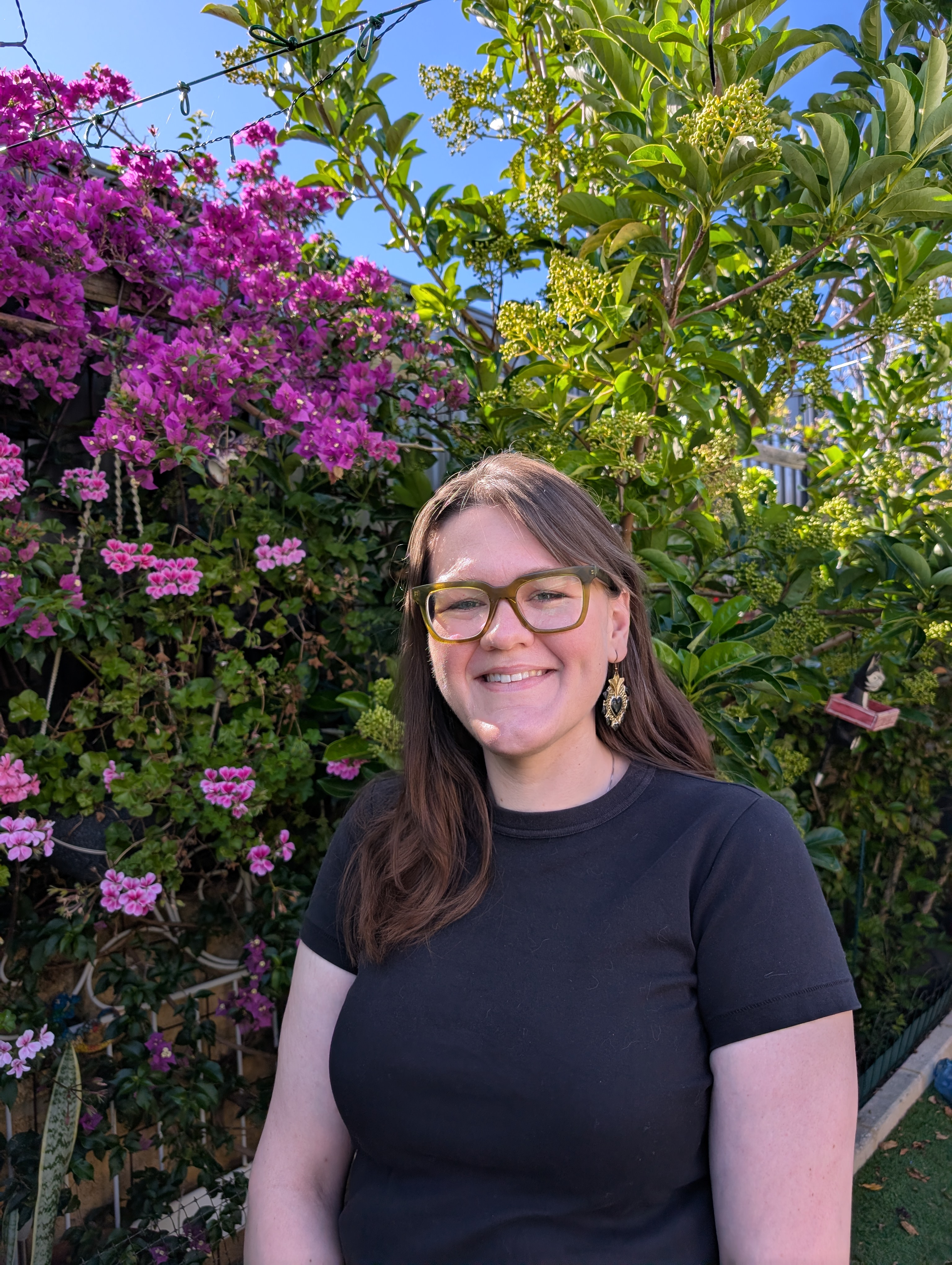
Alison Lane (she/her) is a PhD candidate in Gender Studies & English Literature. Her creative and theoretical work centres on feminist phenomenologies of appetite and love; with attention to the sensual, erotic and relational potentials of fleshy feminine embodiment. She is a book reviews editor for Limina: A Journal of Historical and Cultural Studies, and a sub-editor for Literature and Creative Writing for Pelican Magazine.
Content Warning: Discussions of Disordered Eating
Where have all the fat women gone? This is a question you might have asked—or felt simmering somewhere in your gut—if you have been on the Internet in the last two years or so. It is certainly a question I have asked, sceptically watching as Internet discourse circled around ‘where were you in 2016?’ nostalgia (for those of you old enough to remember the height of Tumblr—pro-ana, thigh gap, skinny-girl emo aesthetics included—this may have been enough to concern you); the increasing emaciation of the women in the Wicked cast; and the discussion of Ozempic, buccal fat removal, and the surgical removal of Brazilian butt lifts.
The return of the ultra-thin is not particularly shocking to me, as someone who has spent my academic life studying the relationship between women, appetite, and feminine embodiment. The boundary delineating what is considered ‘fat’ fluctuates every decade, season, and marketing campaign. Feminine bodies are always going in and out of fashion: ‘slim-thicc’, Marilyn Monroe-esque ‘real woman’ aesthetics, ‘heroin-chic’, ‘curvy’, ‘cardio bunny’, ‘muscle mommy’, ‘ballet core’, etcetera, etcetera.
The re-emergence of the ultra-thin as the ideal of feminine beauty, however, is grounds on which I feel a deep and pressing feminist concern (not to mention fear on behalf of the young women in my life).
The connection of embodiment—particularly the size of the body—to hegemonic femininity and beauty standards is a well-trodden feminist landscape. As such, the study of eating disorders as a cultural phenomenon emerged during the rise of second wave feminism (when women were demanding to take up space in the public sphere en-masse—and when, you might suspect, women would really the need the energy afforded by a full stomach to take political action). Susan Bordo, a landmark scholar in feminist cultural studies, detailed the ways in which all women in patriarchy engage in bodily discipline through weight maintenance in Unbelievable Weight (1993). Her analysis of advertisement, western philosophy and women’s lived experiences of anorexia illuminated diet culture’s ‘direct grip’ (16) on the female body—a tangible influence which ultimately coalesces, in its extreme but logical end, in disordered eating. She makes this argument with attention to Cartesian delineations, in which the body and mind are separated as distinct, oppositional and signifying—with men associated with the mind, and women with the body. Importantly, this signification privileges the masculine/mind with culture: civilized, disciplined, in-control. The body/woman subsequently symbolizes ‘the locus of all that threatens our attempts at control. It over-takes, it overwhelms, it erupts and disrupts’ (Bordo 145; emphasis Bordo’s): the feminine body represents a force of disordered nature, which lacks the ‘discipline’ heralded by patriarchal constructions of subjectivity. It is insatiable, it is hungry, it threatens to expand into the world in an unruly fashion (sprout hair, ooze blood, fatten up). This is, Bordo posits, why women’s bodies have been particularly prone to patriarchal manipulations (be thin, be hairless, be white, be beautiful, be sexy, and for god’s sake, be quiet). She describes that ‘women, besides having bodies, are also associated with the body,’ and therefore the socio-cultural control of feminine embodiment ‘emerged as [a]...strategy in the maintenance of [gendered] power relations’ (143).
I explain this to say that a desire for thinness, in particular the kind of thinness which signifies the attempted escape-from-body of the anorectic, is not simply pathological. It can be easy to read or see accounts of anorexic women and think: that is not me. But Bordo and her predecessors in feminist psychotherapy, Susie Orbach and Kim Chernin, make clear that in our culture—one which is patriarchal, valorises thinness, and applauds women for being beautiful at all costs—it could be you.
In fact, it probably is. I was shocked to learn in the early stages of my scholarship, as a woman who has spent her whole life in a fat body, that lifelong dieting is disordered eating (or, at the very least, a diagnostic precursor). If you are not yet convinced, take a moment to listen to the women in your life around the dinner table. Hear the chorus that sounds when the topic of food arises, and consider if you have ever heard men say the following:
‘Oh, that’s far too much/too rich/too sweet for me!’
‘I’m trying to be good’
’I’ll be naughty, I suppose.’
‘I’m actually not eating carbs/sugar/red meat/gluten/processed foods right now.’
‘I couldn’t possibly finish that!’
‘I’m stuffed!’
‘I’ll pop!’
‘I’m just not hungry, I had a big lunch.’
Diet culture permeates feminine lived experience. It is an invasive species deposited in our culture by patriarchy: an insidious and persistent shadow of misogynistic bodily standards that all women live in. The woman who aspires to thinness (whether she be a medically diagnosed anorectic, a life-long dieter, an Almond mum looking for sugar-free recipes on Facebook, the woman who obsessively goes to the gym, or the teenage girl who turns around in front of the mirror every time she gets dressed) is not an anomaly—her self-loathing is not pathological, it is culturally produced. These women embody ‘in an extreme and painfully debilitating way, a psychological struggle characteristic of the contemporary situation of women’ (Bordo 47): the desire to be beautiful. Indeed, patriarchal culture continues to ‘produce… generation[s] of women who feel deeply flawed, ashamed of their needs, and not entitled to exist unless they transform themselves into worthy new selves (read: without needs, without want, without body)’ (ibid). To return to the connection between long term dieting and anorexia (and the impulse you may feel to say ‘that’s not me’), Bordo leaves us with a sentiment I find myself returning to in the internet age of gaunt aesthetics: ‘Most women in our culture...are “disordered” when it comes to issues of self-worth… eating disorders, far from being “bizarre” and anomalous, are utterly continuous with a dominant element of the experience of being female in this culture’ (57).
Let’s not forget patriarchy’s brother-in-arms: capitalism. It is far easier to sell herbal weight-loss teas, collagen supplements, bespoke women’s health vitamins, at-home laser hair removal, waist trainers, merkins, mounjaro injections, reformer pilates studio memberships, influencer-promoted nutrition plans and active wear that only goes up to a size twelve (labelled ‘XL’ for pronounced effect) to a woman who has been taught to hate her body. You can’t sell weight loss drugs or ‘slimming’ regimes by advertising the effects of long-term dieting or disordered eating: a damaged sense of self-esteem, bodily hirsutism, potentially life-long intestinal absorption issues, hair loss, chronic fatigue, menstruation loss, fertility issues, tooth and gum disease, increased risk of heart failure, and potentially permanent anxiety and shame around food, to name a few (who wouldn’t want to invest in that advertising campaign?). In other words, the rise of the ultra-thin woman in 2026 is simply a manifestation of the same patriarchal-capitalist expressions of power which had our mothers stuffing their bras with tissues, doing TV aerobics routines in their living rooms, and having a handful of almonds for dinner—when they could have been, let’s say, marching in protest against the Vietnam war or attending feminist consciousness-raising groups.
This political element, that the ultra-thin bodily ideal rears its emaciated head when women’s liberation is gaining ground, is worth noting. Bordo certainly draws a parallel between the rise of anorexia in the 1980s/1990s directly following second-wave feminism (punctuated by a rise in women entering the corporate workforce, consequently gaining the personal and financial independence their mid-century mothers could only dream of) and the phenomenon of hysteria in Victorian England. As the public/private spheres became destabilized by emergent ideological ‘upheavals related to gender... femininity itself required the holding of breath, the loss of air, the choking down of anger and desire, the relinquishing of voice, the denial of appetite, the constriction of body’; the very cultural parameters which had one diagnosed as a ‘hysteric’, unfit to and incapable of participating in women’s liberation (Bordo 50).
The timing of our present bodily diminishment, then, should raise suspicion. It is worth considering that in 2026—when women (and especially feminism) is accused of thrusting masculinity into ‘crisis’, the right-wing and ultra-conservative political movements have become mainstream, reproductive rights are being revoked, global warming continues to be denied, and war-mongering (read: patriarchal, capitalist, racist) governments refuse to renounce genocide—the cultural grip of thin bodily ideals continues the trajectory of the hysteric. It only serves to protect patriarchal systems of power if we cannot march in protest because we are exhausted from skipping breakfast; so occupied with maintaining ‘Pilates arms’ that we don’t think to organize mutual aid; or so worried men think we’re fat that we don’t stop to reject the ways in which we are harmed by misogyny in our intimate relationships.
The shame, disgust, fat-phobia, self-loathing, woman and femme-hating beauty standards of today are the same misogynistic privileging of discipline, control and masculinity of Western patriarchal capitalism eternal.
Lest you feel judged, or stupid, or not-feminist-enough for feeling the effects of the returning ultra-thin, hear this: I—having dedicated my entire academic career towards embracing feminine appetite; exploring the pleasures of the fleshy body; and the eroticism of food—have not been immune to former iterations of the ‘tyranny of slenderness’, nor this resurgence of public bodily loathing (Bordo 33). I have always been a fat woman, and regardless of where that ever-shifting line which denotes ‘thin’ (read: beautiful, desirable, acceptable, palatable) falls, I have and probably will find myself on the other side of it. The striking presence of sharp collarbones on Instagram feeds, knobbly vertebrate silhouettes on red carpets, and the noticeable shrinking of women who look like me (the titular fat women, fleeing their embodiment in droves); has affected even me. I have cried in dressing rooms—over jeans that won’t zip, bras squishing flesh into hilly landscapes, bulging buttons one deep breath away from no return—skipped breakfasts, caught myself longingly staring at women thinner than I am. I have spent many hours agonizing over my body—this is what patriarchy works so hard to convince you to do, after all.
Let me be clear: the power structures that demand thinness effect all feminine bodies, not just fat ones. A fat woman desperately trying the latest fad diet (keto, Atkins, fast 800, intermittent fasting, raw foods only) exists on the same spectrum as the anorexic, the new mother waking up for five am runs to achieve her ‘pre-baby bod’, the middle-aged woman having an apple for dinner, the woman locked into a 7-days a week (or else) reformer Pilates membership that closely resembles a cult, and the teenage girl compulsively rolling up the shorts of her school uniform. Stumbling into this web (or flinging yourself towards it or falling face-first into it) is not a failure of womanhood (or feminism, for that matter): it is a symptom of the pervasive and systemic nature of misogynistic bodily discipline, enacted in this case through fatphobia and his most loyal general, diet culture.
This is why I am deeply worried about the current turn towards the ultra-thin. I fear that other feminine-bodied folks will be caught in this trap, set so expertly by centuries of patriarchy. I worry as a woman, a big sister, a feminist, an older cousin to teenage girls, a lover of all things feminine identified, a woman who hungers. The remedy is not to simply ‘love yourself’ (I hate it when people say this; if it were that easy, all women would just do it), it is to actively resist patriarchal narratives and practices where we have the capacity and opportunity to do so. We cannot tell other women to ‘love themselves’ when we actively engage in practices that diminish us: make us smaller, thinner, more acceptable. As bell hooks articulates, we cannot ‘cultivate the false assumption that we can hate our bodies and still be loving’ (105). To do this ‘loving’ we must ‘reclai[m] the right to inhabit a healthy body… What we must say no to is a world that tells us we are solely defined by our physical bodies, that these female bodies are inadequate, lacking, and not good enough’ (hooks 108). If we spend so much time trying to be thin, we might not change the world the way we want it changed—we will be too exhausted, starved, self-hating.
We must not let ourselves be gripped so tightly by misogynistic control of our bodies that we cannot rest back our power. The way towards feminine bodily liberation is praxis. My advice: live in the flesh of your body with as much defiance as you can muster. Nourish it. Let it grow. Let it expand as it wills, take up space, guide your instincts (they come from your gut, after all). Feed your body and feel its strength, power, softness, size, fleshiness and appetite (for food, sex, freedom, love, change). Remember: you cannot fight the patriarchy on an empty stomach.
Cited:
Bordo, Susan. Unbearable Weight: Feminism, Western Culture and the Body. University of California Press, 1993.
hooks, bell. Communion: The Female Search for Love. William Morrow (Harper Collins) USA, 2002.


Comments