An Interview with James Stanwix
Updated: Jul 28
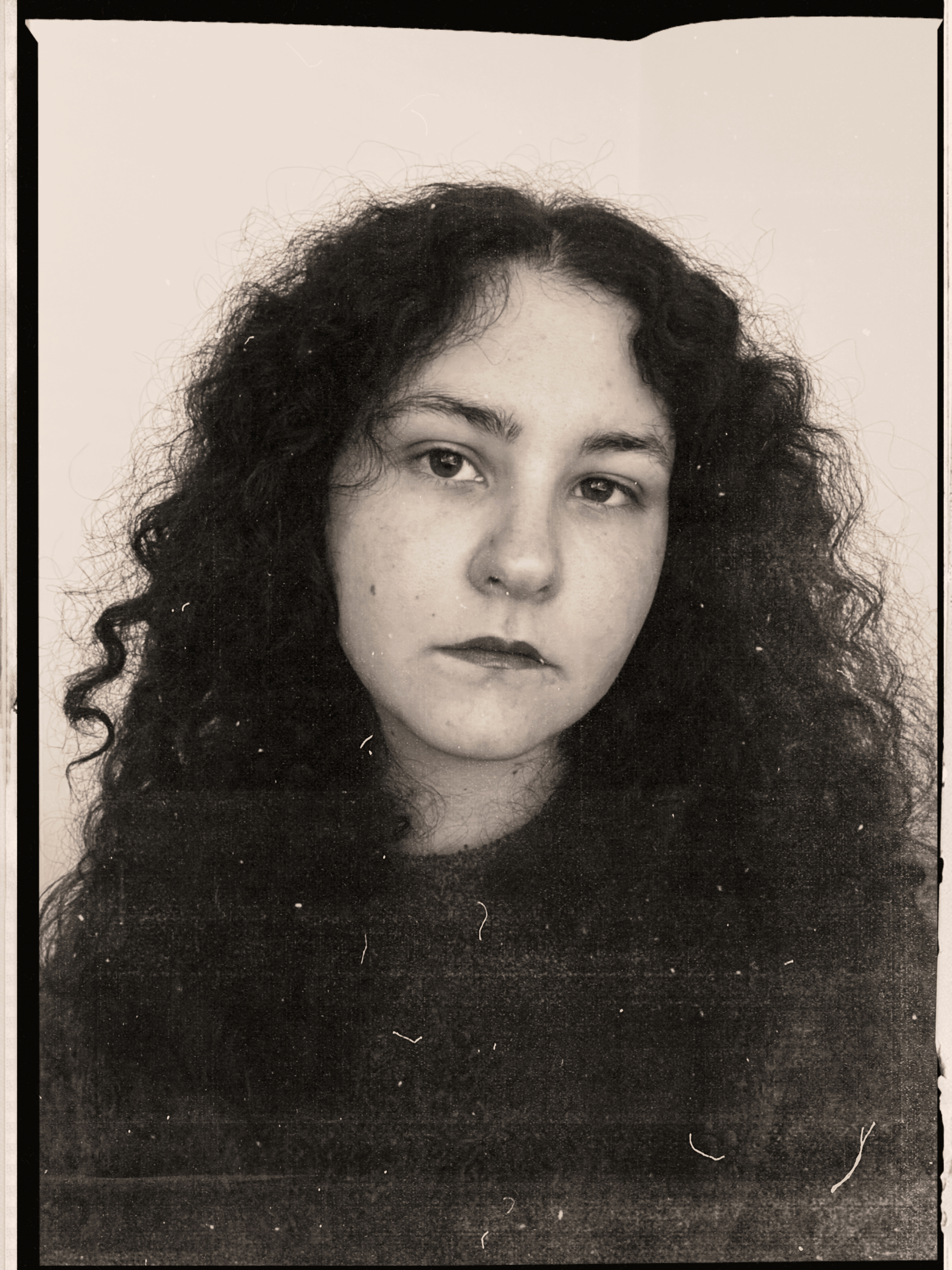
James Stanwix (he/they) is a writer and researcher working on unceded Whadjuk Noongar land. He loves to take photographs too, and currently use a Leica M3, and largely, Ilford HP5 stock. They have had their work published by Westerly, Cordite, Pulch, Artery Zine, Meniscus, The Suburban Review and Pelican Magazine, and hold First Class Honours in Creative Writing from UWA. James co-runs the monthly poetry project, Hem Poetics.
Ellie Fisher: For readers who may not know your work, could you introduce yourself and tell us a little about your writing practice?
James Stanwix: Hello, thanks for having me. I am James, a poet, photographer and researcher in the social impact space, which has been new and interesting. Being a pretty fresh writer, my practice is really quite fluid and the form I enjoy expressing myself in shifts often. I’d say, though, that there are a few constants. For one, I really think that poetry and photography fit like bricks. I will often take a photograph and then, on revisiting a roll, be inspired to make a poem. Vice versa, if I am trying to express my experience of a space, I find that photography is helpful as a bounding tool, delineating the borders of my subject. Another constant is ‘response’, which is also latent in seeing photography as a companion to poetry. I run a poetry project with Hannah Reynolds called Hem, which is all about responding to a-poet-a-month’s feature poem. I’ve found this act of response has been challenging but also led me to write some of my more favourite poems. As for the act of writing more generally, I keep folders for each month of each year, and aim to fill each with ten drafts. I will try and let these ferment for a few months and then revisit and edit the ones that persist.
EF: Your work moves across poetry, prose poetry, photography, and other creative forms. What draws you to working between genres, and what possibilities does prose poetry offer that more conventional poetic forms might not?
JS: Yes—I really love all of those! For me, form definitely follows idea/feeling/experience. In terms of poetry, in my drafting, I will typically begin by writing something that is vaguely metrical and in syllabic verse. This helps me get the idea down because the line breaks are dictated by syllables and not by more nebulously justifiable delineations! From here, whether I morph this into a prose poem or not depends on two things: the musicality of the language and the narrative qualities of the piece. Prose poetry, I think, offers a visual context which helps narrative poetry be received more willingly, and I think that a musical interior contrasted with a firm and justified exterior makes concise the swirling rigidity of feeling. In terms of photography, I really like taking photos of stuff I find pretty.
EF: Memory is the theme of this issue of Pelican. Your Honours project engaged with a personally nostalgic trail in the Perth Hills through both text and image. What interests you about memory as creative material?
JS: For me, I think it is not so much that the fruitfulness of memory makes good material, but that language—in some form—is really fundamental to memory and so language-forward forms are able to get a little closer to memory’s mystery. I find that my memory is slippery, and that it is quite easy for something to assume a different shape—true or not—because of a phrase I overhear or a reminiscent shade of sun. Writing, I think, lets me represent these collisions of disparate experiences and then, when finished, tie it up with a title. I think, because my memory is slippery, or maybe better, sometimes creative, it makes sense to me to approach it as a creative material.
EF: You founded Hem Poetics—and now run it alongside Hannah Reynolds—which has become an important space for poets in Walyalup. What inspired you to start the series, and what have you learnt from creating a regular poetry community?
JS: Shout out to Hannah and also my partner Amalia for all they do to help! I actually initially started the series because I wanted to get a little bit more experience in editing and publishing. Over the summer before my Honours year, I reached out to Steve Grant at the Fremantle Herald to see if he would have room in the paper for a creative writing column. Fortunately for me, he did, though there was the problem of payment for the poets who would feature. That is where the reading series came in. The initial plan was to run a show featuring a local poet and emerging responders, and use the ticket sales to pay said poet for the column. At the time, the lovely Rosie Shute was leaving East, so a show slot opened up at the Buffalo Club. Alan Fyfe—what a guy—was incredibly generous, and offered to feature for free, as well as suggesting I apply for some government money. That grant application was successful, which made everything a bunch easier. The whole experience has re-taught me how happy community can make people, and that a bunch of voices spending time focussed on one poem really builds the meaning that poem can carry.
EF: Many writers are suspicious of nostalgia, while others embrace it. How do you navigate the tension between remembering a place or moment and reimagining it through art? What are your favourite texts which examine memory?
JS: Mm, I think I am one of the suspicious people. In my eyes, there is a tension between working and writing on unceded Whadjuk Noongar land and writing nostalgically about this place, because, as a settler subject, the land which I feel nostalgia for has become a canvas for my halcyonic sentiments as a result of—in some way—a sustained settler-colonial dispossession of Aboriginal sovereign land. The number one way to navigate this is surely to read and speak with people who know more. Ambelin Kwaymullina’s ‘Living on Stolen Land’, Evelyn Araulen’s ‘Dropbear’, Burce Pascoe’s prose, Peter Minter’s scholarship, John Kinsella and Charmaine Papertalk Green’s collaborative volumes, and much more; these are all great sources to commune with. Also though, speak to people. Translating this in art is more difficult and I don’t have an answer. Something I tried in my Honours was engaging with a colonial sign above a RailTrail in the Perth Hills, using this as a catalyst to reappraise some of my own possibly unconscious biases. Another thing I tried was taking double exposed photographs of this trail, but covering the viewfinder with tape for the second exposure, to try and remove my perspective from frame.
EF: Photography sits alongside writing in your practice. Do images help you remember, or do they sometimes complicate and reshape your memories of a place, person, or experience?
JS: I think photographs in general, maybe that my mum’s taken, can definitely make me realise I have remembered something incorrectly! Unfortunately though, my photographs are often just of textures or plants, and in editing, they will become something entirely apart from their original subject. Maybe when I take a picture of a unique slash or smudging of light, looking back at that will sometimes cause me to remember something entirely separate to the picture at hand, and then maybe remember in a slightly chipped way. More often than not though, yes, they do help me remember—that must be a reason I like them so much.
EF: Looking ahead, what projects are you currently working on?
JS: Outside of Hem, I am currently working on two chapbooks and a PhD proposal. My chapbooks—which were initially a manuscript but got trimmed with sharp scissors—have been really fun, and one is based off of my Honours, while another is based off of some other work from the last three years. They both have photographs in them, too. My PhD proposal has been a process, and I think I am moving towards something that could constitute a four-year research project. Dr Kate Noske has been very helpful and is always so generous with her time. Outside of these, I am just trying to keep ticking along at work and enjoying time with my lovely partner and cat.



Comments